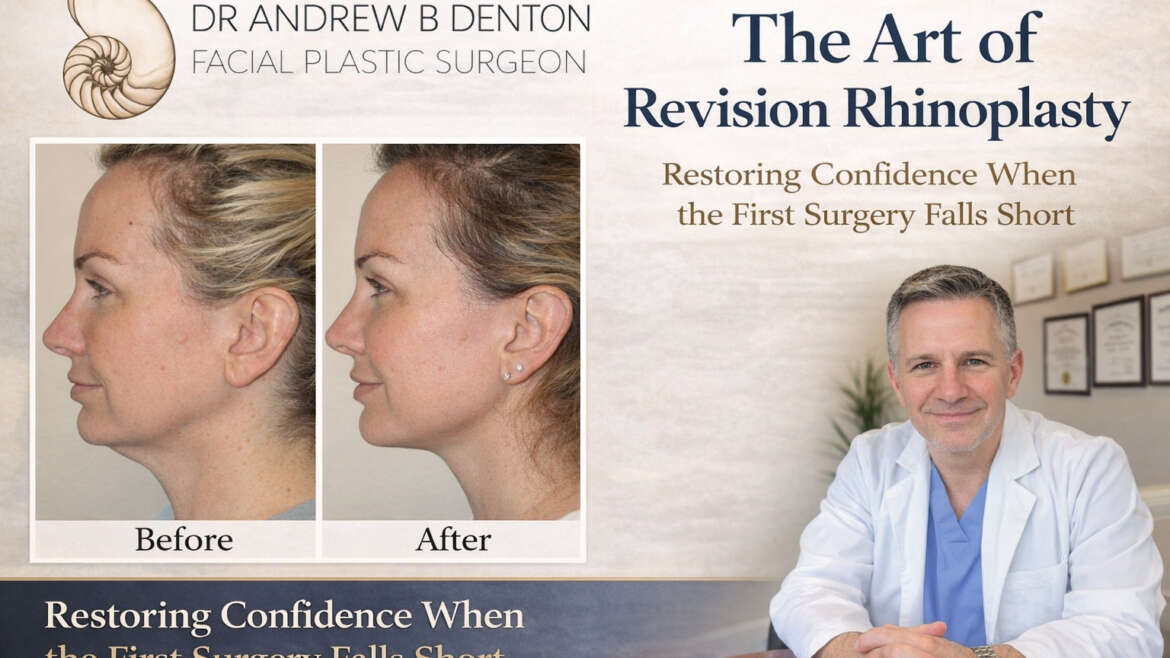
The Art of Revision Rhinoplasty: Restoring Confidence When the First Surgery Falls Short
You did everything right. You researched surgeons, asked questions, and trusted the process. But now, looking in the mirror, something still feels off — and this isn’t the nose you hoped for.
If this sounds familiar, know that you are far from alone. Rhinoplasty is one of the most technically demanding procedures in all of plastic surgery. Even in the hands of skilled surgeons, outcomes don’t always match expectations.
The good news? A second chance is possible — and in many cases, results can be even better than what was originally hoped for. This is the world of revision rhinoplasty, and it is where Dr. Denton, a leading facial plastic surgeon based in Vancouver, Canada, has built a reputation for excellence, precision, and deeply compassionate patient care. His goal is to help you reconcile your internal vitality with your outward appearance, restoring not just your nose, but your peace of mind.
The Emotional Weight of an Unsatisfying Rhinoplasty
Few things are more personal than how you feel about your own face. The nose is the central feature of the face, and its shape, size, and balance influence how others perceive us — and how we perceive ourselves. When rhinoplasty results don’t meet expectations, the emotional fallout can be significant and far-reaching.
Many patients who seek revision rhinoplasty describe feelings of regret, embarrassment, and even grief over the way they look. Some avoid social situations or photographs. Others find themselves obsessing over the perceived flaw, spending hours examining their reflection. For a number of patients, anxiety and depression become real concerns in the aftermath of an unsatisfying surgery.
It is important to acknowledge these feelings rather than dismiss them. Your emotional wellbeing matters just as much as the physical outcome. That said, it is equally important to distinguish between dissatisfaction that stems from a genuinely poor surgical result and dissatisfaction that may be connected to body image issues or unrealistic expectations.
Consequently, before proceeding, it is vital to reflect on your motivations. Are you seeking a subtle refinement to achieve the harmony you originally desired? Most successful revision patients are motivated by a boost in self-esteem and the desire to feel comfortable in their own skin. It is essential to approach this journey with a positive attitude and a clear understanding that while we can achieve significant improvement, the goal is natural-looking facial balance, not absolute perfection.
Dr. Denton’s approach: During every consultation, Dr. Denton takes the time to understand not just what patients want to change physically, but how they are feeling emotionally — because sustainable satisfaction starts from within. If you are experiencing significant distress related to your appearance, speaking with a mental health professional before pursuing any cosmetic procedure is always a wise first step.
Why Patients Seek Revision Rhinoplasty
Revision rhinoplasty patients come from all walks of life, and their concerns are as varied as their faces. However, certain complaints arise time and again in the consultation room:
- Persistent bump or hump on the nasal bridge that was not adequately reduced
- A tip that appears pinched, over-rotated, or asymmetrical
- Breathing difficulties or nasal obstruction that developed or worsened after surgery
- Nostrils that appear too large, too small, or uneven
- An overall result that looks operated-on or unnatural
- Scar tissue or contracture causing distortion of the nasal shape
- Collapse of nasal structures due to over-resection of cartilage
- Dissatisfaction with proportions relative to the rest of the face
Some of these concerns are cosmetic in nature, while others — particularly breathing issues — have a direct impact on quality of life. In many cases, patients are dealing with a combination of both functional and aesthetic problems, and a skilled revision rhinoplasty surgeon will address both simultaneously.
Setting Realistic Expectations: What Revision Can and Cannot Do
One of the most important conversations Dr. Denton has with prospective patients is around expectations. Revision rhinoplasty can produce truly remarkable improvements — but it is not magic, and it is not without limits.
The nasal tissues that have already undergone surgery are fundamentally different from untouched tissue. Scar tissue, reduced blood supply, and altered structural support all influence what is surgically achievable. In some cases, additional cartilage grafts are needed to reconstruct areas where too much tissue was removed during the original procedure.
“Realistic expectations should not be confused with low expectations. With the right surgeon and the right approach, revision rhinoplasty patients often achieve results that are genuinely transformative — both physically and emotionally.”
— Dr. Denton, Facial Plastic Surgeon, VancouverDr. Denton uses state-of-the-art computer imaging technology during consultations to help patients visualize what realistic improvements might look like. This powerful communication tool ensures that patients and surgeon are fully aligned before a single incision is made.
What to Do Before Committing to Revision Rhinoplasty
Making the decision to pursue revision rhinoplasty should never be rushed. Here is what Dr. Denton recommends for anyone considering this step:
Wait for Full Healing
Nasal swelling after surgery can persist for up to 12–18 months. Unless you are dealing with a functional emergency, most surgeons recommend waiting at least one year before considering revision surgery.
Document Your Concerns
Before your consultation, make a list of everything that bothers you about the current result — aesthetic and functional. Photographs from multiple angles in consistent lighting are incredibly helpful.
Gather Previous Surgical Records
Operative notes from your primary rhinoplasty provide vital information about what changes were made, what cartilage was removed, and what techniques were used — all critical for your revision surgeon.
Prioritize Your Mental Health
Pursue revision surgery because it aligns with your personal goals — not because of external pressure or a pursuit of perfection. A good surgeon will screen for these concerns during your consultation.
Choose Your Surgeon Carefully
Revision rhinoplasty is significantly more difficult than primary rhinoplasty. You need a surgeon with specialized experience in revision cases. Take your time, and do not make this decision based on price alone.
Why Revision Rhinoplasty Is One of the Most Challenging Surgeries in Plastic Surgery
If primary rhinoplasty is considered a technically demanding procedure, revision rhinoplasty takes that complexity to an entirely different level. Understanding why helps explain the importance of choosing a surgeon with specific expertise in this area.
After a primary rhinoplasty, nasal tissues have undergone a healing process that produces scar tissue and alters structural integrity. The delicate cartilage and soft tissue a revision surgeon must work with is stiffer, less predictable, and more prone to complications than virgin tissue.
In many revision cases, structural support has been compromised because cartilage was over-resected during the original procedure. To restore proper support and shape, a revision surgeon may need to reconstruct the nasal framework using cartilage grafts — requiring both artistic vision and precise surgical skill.
Managing expectations also becomes even more nuanced. Predicting exactly how revised tissue will heal and settle is inherently more uncertain than with primary procedures. An experienced revision rhinoplasty surgeon like Dr. Denton communicates these realities honestly while drawing on years of specialized experience to produce the best possible outcomes.
Expertise You Can Trust: Dr. Denton’s Approach to Revision Rhinoplasty
Dr. Denton is a fellowship-trained facial plastic surgeon practicing in Vancouver, BC, with extensive experience in both primary and revision rhinoplasty. His practice is dedicated exclusively to facial procedures — meaning every surgery he performs is on the face, and he has developed a deep, nuanced mastery of facial anatomy and aesthetics.
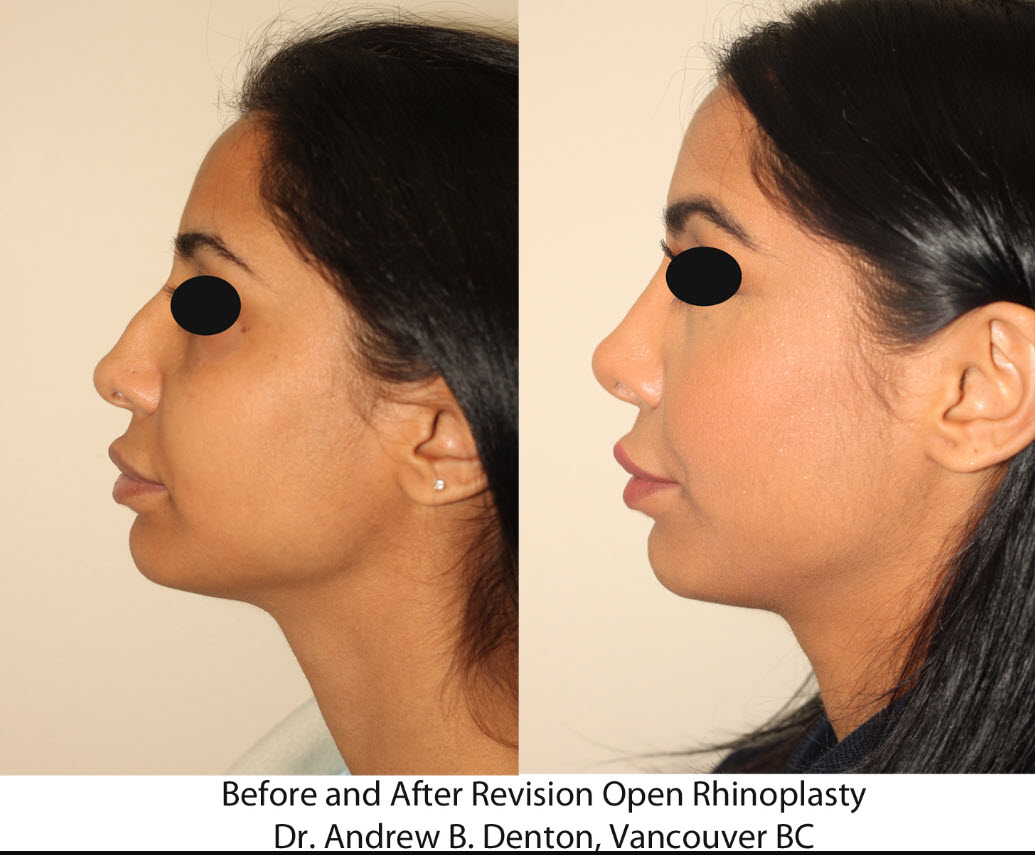
Revision rhinoplasty represents a significant portion of Dr. Denton’s practice. This is not by accident — it is the result of a reputation built on careful, thoughtful surgical work and an unwavering commitment to patient satisfaction. Patients travel from across British Columbia and beyond to see Dr. Denton specifically because of his expertise in complex revision cases.
What sets Dr. Denton apart is his combination of surgical precision and genuine compassion. He understands that by the time most revision patients reach his consultation room, they have already been through a difficult experience. His approach is never dismissive or rushed — he listens carefully, asks the right questions, and takes the time to understand each patient’s unique history, anatomy, and goals.
Why Dr. Denton Favours Open Rhinoplasty for Revision Cases
Open Rhinoplasty — The Gold Standard for Revision Cases
Open rhinoplasty involves a small incision across the columella — the narrow strip of tissue between the nostrils — allowing the surgeon to lift the nasal skin and directly visualize the entire underlying framework. In revision cases, where anatomy may have been significantly altered, this direct access is invaluable.
Key advantages in revision surgery:
- Unobstructed access to all nasal structures, including tip cartilages, septum, and nasal bones
- Ability to identify and address scar tissue, malpositioned cartilage, and structural deficiencies with greater accuracy
- More reliable placement of cartilage grafts, which are often required in revision surgery
- Better control over tip definition, symmetry, and projection
When cartilage grafting is required — which is common in revision cases where previous surgery removed too much structural support — Dr. Denton is skilled in harvesting cartilage from the ear (conchal cartilage) or rib, depending on the volume and type of graft needed. He takes a meticulous approach to graft placement, ensuring natural-looking results that stand the test of time.
A Personalized Journey: What to Expect at Your Consultation
From the moment you walk into Dr. Denton’s Vancouver clinic, you will notice that things are done differently. This is not a high-volume, assembly-line practice. Every patient is treated as an individual, and every consultation is a genuine, unhurried conversation.

Your initial consultation will begin with a thorough review of your medical and surgical history. Dr. Denton will ask about your previous rhinoplasty, perform a detailed physical examination, and assess the skin, cartilage, bone, and septal structures.
One of the most valued aspects of Dr. Denton’s consultations is the use of computer imaging to help visualize potential changes. Using advanced imaging software, Dr. Denton can simulate what various changes might look like on your specific face — ensuring patient and surgeon are aligned well before surgery begins. This technology significantly improves the match between patient expectations and surgical planning.
By the end of your consultation with Dr. Denton, you will have a clear understanding of what is realistically achievable, what the surgical plan involves, what recovery looks like, and what your investment would be. There is never any pressure to move forward — the decision is entirely yours to make on your own timeline.
How to Choose the Right Revision Rhinoplasty Surgeon in Vancouver
If you are searching for a revision rhinoplasty surgeon in Vancouver, the decision should be made carefully and without rushing. Here are the key factors to consider:
Facial Specialization
Look for a surgeon who focuses exclusively on the face — they will have far deeper knowledge of nasal anatomy and aesthetics than a general plastic surgeon.
Revision Experience
Ask directly how many revision rhinoplasties the surgeon performs per year. Look for before-and-after photos that specifically show revision cases.
Board Certification
Verify Royal College of Physicians and Surgeons of Canada certification, with fellowship training in facial plastic and reconstructive surgery.
Patient Reviews
Look for consistent, authentic reviews that speak to communication quality, the consultation experience, and post-operative support — not just surgical outcomes.
Comfort & Communication
You need to feel genuinely comfortable with your surgeon. Do they listen? Do they explain things clearly? If something feels off in the consultation room, trust that instinct.
Honest About Limits
A trustworthy surgeon will be honest about what revision surgery can and cannot achieve. Be wary of anyone who promises perfection or minimizes complexity.
Facility Accreditation
Confirm that your surgery will take place in a fully accredited, state-of-the-art facility, like our West Coast Cosmetic Surgery Centre.
Academic Involvement
A surgeon involved in research and teaching, as Dr. Denton at UBC, is often at the forefront of the most effective surgical treatments.
What to Expect After Revision Rhinoplasty
Recovery from revision rhinoplasty is generally similar to that of primary rhinoplasty, though it can vary depending on the complexity of the procedure. Most patients take one to two weeks off work and social activities. Swelling and bruising are normal and expected, particularly in the first week.
A nasal splint or cast is typically worn for the first one to two weeks following surgery. Most of the visible swelling subsides within three to four weeks, though subtle swelling — particularly at the nasal tip — can persist for many months.
It is important to approach recovery with patience. The final result of revision rhinoplasty may not be fully apparent for 12–18 months, as the tissues gradually settle and refine. Dr. Denton and his team provide comprehensive post-operative care and are available to answer questions throughout the entire recovery process.
Ready to Restore Your Confidence? Book Your Consultation with Dr. Denton Today
Living with the aftermath of an unsatisfying rhinoplasty doesn’t have to be your permanent reality. Dr. Denton has helped countless patients in Vancouver reclaim their confidence and achieve the natural, harmonious results they originally hoped for.
You deserve to look in the mirror and see a reflection that matches the vibrant person you are inside. While a disappointing first surgery is a setback, revision rhinoplasty offers a path to harmony and renewed self-esteem. By combining over two decades of specialized experience with advanced technology and a personalized, collaborative approach, I am here to help you achieve the natural-looking result you’ve always wanted.
Ready to take the next step toward a profile you love? Schedule your confidential revision rhinoplasty consultation with Dr. Denton today. Let’s work together to restore your confidence and achieve the facial harmony you deserve.
Schedule Your Consultation Visit www.doctordenton.com · Vancouver, BCFrequently Asked Questions
In most cases, surgeons recommend waiting a minimum of twelve months after your primary rhinoplasty. Nasal swelling can persist for up to a year or more, and what appears to be a flaw during early healing may resolve on its own. Only in cases involving functional emergencies might earlier intervention be considered.
Generally, yes. Revision rhinoplasty is typically more complex and time-consuming than a primary procedure, which is reflected in the surgical fee. Additional costs may arise if cartilage grafting from the ear or rib is required. Dr. Denton’s clinic provides a full, transparent breakdown of all costs during your consultation.
A primary goal of revision rhinoplasty with Dr. Denton is to produce results that look natural and harmonious with the rest of your facial features — not operated-on. Using techniques such as open rhinoplasty and cartilage grafting, Dr. Denton restores and refines nasal structure in a way that enhances your overall appearance without looking artificial.
Absolutely. Many revision rhinoplasty patients have both cosmetic and functional concerns, and Dr. Denton is well-equipped to address both in a single surgery. Structural issues such as a deviated septum, collapsed nasal valves, or over-resected cartilage can often be corrected simultaneously with cosmetic refinements.
Technically, more than one revision is possible, but each subsequent surgery increases complexity and risk. With each procedure, available tissue becomes scarcer, scar tissue accumulates, and the surgical margin for improvement narrows. This is one of the primary reasons why choosing the right surgeon — for any rhinoplasty — is so critically important.
Pain levels are generally similar between primary and revision rhinoplasty. Most patients describe discomfort as manageable and well-controlled with prescribed medications. If rib cartilage is harvested, there may be some additional temporary discomfort at the donor site, though this typically resolves within a few weeks.
The best way to determine candidacy is through a thorough consultation with Dr. Denton. Generally, good candidates are in good general health, have allowed adequate healing time after their primary rhinoplasty, have specific and realistic goals for improvement, and are emotionally prepared for the process and its recovery.
Yes, absolutely. A significant number of Dr. Denton’s revision rhinoplasty patients had their original surgery performed by other surgeons — both in Vancouver and in other cities or countries. Dr. Denton evaluates each patient based on their current anatomy and goals, without judgment about past surgical decisions.
Open rhinoplasty involves an additional small incision on the columella, allowing the surgeon to lift the nasal skin and directly see and work on the cartilage framework. Closed rhinoplasty uses only internal incisions. For revision cases, Dr. Denton typically favours the open approach because it provides superior visualization and access — particularly important when dealing with scar tissue and altered anatomy.
Simply visit contact page to request a consultation. Dr. Denton’s friendly, professional team will schedule your appointment. During your consultation, you’ll share your concerns, review computer imaging, ask all your questions, and receive a comprehensive, personalized treatment plan — in a warm, unhurried environment.