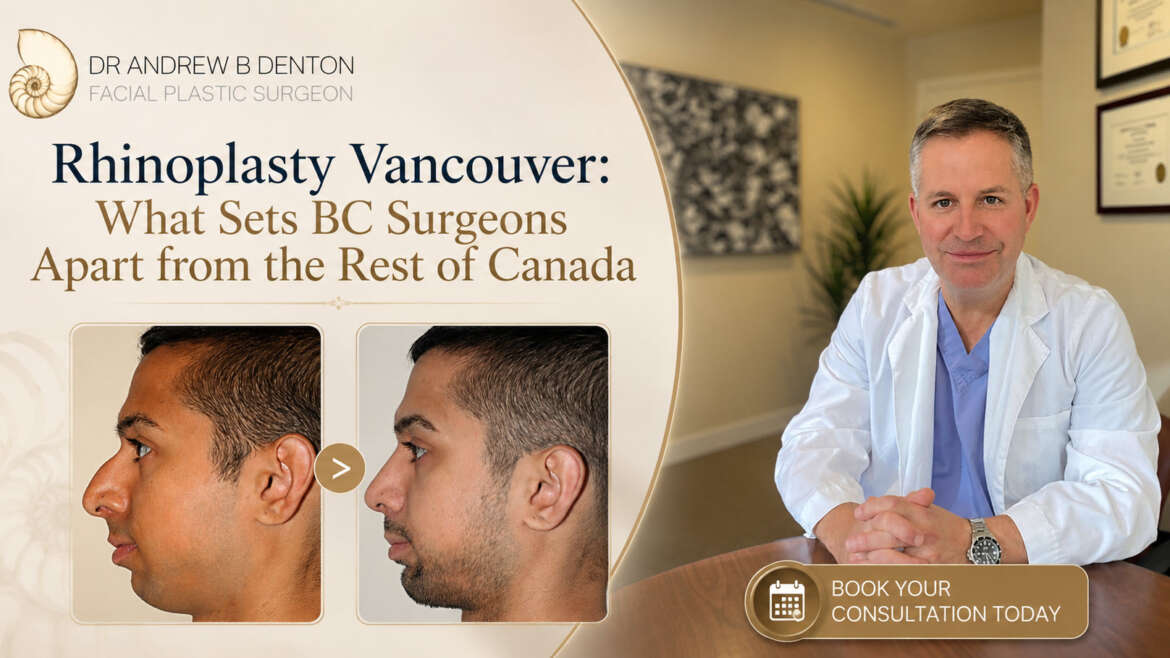
By Dr. Andrew B. Denton, MD | Board-Certified Facial Plastic Surgeon | Vancouver, BC
Your nose sits at the centre of your face, quite literally. It is the first feature the eye naturally falls upon, the architectural anchor from which all other features find their proportion. And yet, for many people, it is the one feature they have spent years hoping others would not notice.
This quiet discomfort, the habit of angling away from cameras, the pause before a mirror, the small erosions of confidence that accumulate over time, is something no one should have to live with. Rhinoplasty, performed by the right hands, is not about creating a different face. It is about restoring the face you were meant to have: balanced, harmonious, and entirely your own.
Vancouver has quietly become one of Canada’s most sophisticated markets for facial plastic surgery, and rhinoplasty in particular. Patients throughout the Lower Mainland, from North Vancouver and West Vancouver to Richmond, Burnaby, and Surrey, are increasingly seeking out surgeons who understand both the technical complexity of nasal surgery and the extraordinary importance of preserving identity in the process.
The question is never simply whether to have rhinoplasty. The question is who will perform it, and whether they possess the combination of surgical mastery, artistic sensibility, and deep anatomical expertise that the procedure demands.
In this guide, we will explore what makes rhinoplasty one of the most technically demanding procedures in facial plastic surgery, why board certification matters, what distinguishes Vancouver surgeons, and how to choose the specialist who will deliver results so natural that people will notice only that something has quietly, beautifully changed.
Why Rhinoplasty Is One of the Most Technically Demanding Cosmetic Procedures
Rhinoplasty is frequently mischaracterized as a straightforward cosmetic procedure. It is not. Among facial plastic surgeons, it is widely regarded as among the most technically demanding operations in the specialty, one that requires not only surgical precision but a thorough understanding of three-dimensional anatomy, long-term tissue healing, functional airway dynamics, and the subtle interplay between nasal structure and overall facial proportion.
The Anatomy of Complexity
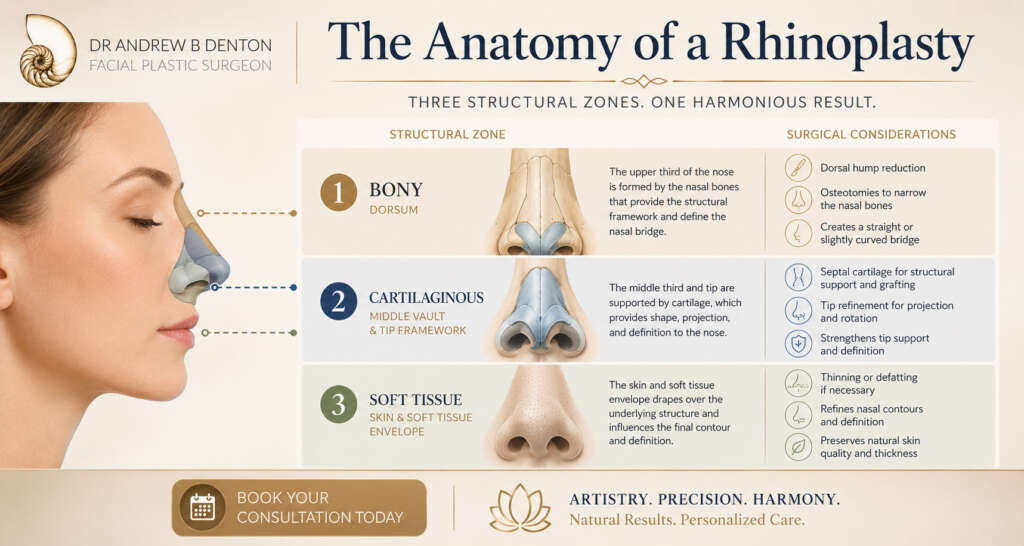
The nose is composed of a framework of bone at its upper third, cartilage in its middle and lower thirds, and an overlying envelope of skin and soft tissue, each layer with its own behaviour, thickness, and healing timeline. A change to the bony dorsum requires precise osteotomies. Modifications to the cartilaginous tip demand suture techniques, grafting, and an intimate understanding of how cartilage memory and tension interact over time. The skin itself, whether thick or thin, oily or fine, behaves differently over the altered framework, and can either flatter or betray the surgical result.
Key anatomical considerations that make rhinoplasty uniquely complex:
- Structural support: The nose must remain functionally sound while being aesthetically refined. The internal valve and external valve must be preserved or reinforced to maintain airway patency.
- Cartilage behaviour: Lower lateral cartilages are living tissues with elastic memory. Techniques that work beautifully intraoperatively may settle differently over months.
- Skin thickness: Thick skin conceals fine refinements; thin skin broadcasts every irregularity. The surgeon must plan with the patient’s actual skin in mind, not an idealized version of it.
- Symmetry limitations: Perfect facial symmetry does not exist. The challenge is creating optical harmony, not geometric equality.
- Ethnic anatomy: Nasal anatomy varies significantly across ethnic backgrounds. A skilled surgeon must understand and respect these differences rather than applying a single aesthetic template.
- Long-term healing: Rhinoplasty results continue to evolve for 12 to 18 months or longer. The surgeon must anticipate how the result will look not only on the table, but years hence.
- Airway function: Cosmetic and functional goals must be pursued simultaneously. Narrowing the nose without addressing the internal structures risks significant breathing compromise.
Rhinoplasty is not simply nose reshaping. It is the precise, artistic reorganization of a living three-dimensional structure that breathes, ages, and responds to the world, long after the surgeon closes the incision.
Why a Board-Certified Facial Plastic Surgeon Matters
In Canada, as in the United States, the title of cosmetic surgeon is not specifically regulated, meaning that a broad range of practitioners, from general plastic surgeons to dermatologists to ENT specialists, may legally offer rhinoplasty. This makes the question of credentials not merely bureaucratic, but genuinely consequential for patient safety and outcome quality.
What Board Certification in Facial Plastic Surgery Means
Fellowship training in facial plastic and reconstructive surgery through the Royal College of Physicians and Surgeons of Canada, or equivalent international bodies such as the American Board of Facial Plastic and Reconstructive Surgery (ABFPRS), represents an advanced level of subspecialty training focused exclusively on the face, head, and neck.
A board-certified facial plastic surgeon brings:
- Subspecialty focus: Their training, research, and daily practice centres entirely on the face. The nose is not one of many concerns. It is the primary concern.
- Advanced anatomical expertise: Fellowship training includes detailed study of nasal anatomy, facial proportions, and the intricate relationships between nasal structure and facial balance.
- Aesthetic balance training: Beyond technical skill, this training cultivates an artistic eye for proportion, harmony, and the nuanced differences between what is technically achievable and what is genuinely beautiful.
- Functional preservation: Board-certified facial plastic surgeons are trained to address both cosmetic and functional concerns simultaneously, understanding that breathing and beauty are not mutually exclusive.
- Revision expertise: Complex revisions, cases involving scarring, weakened cartilage, or prior surgical complications, demand a level of mastery that comes only with subspecialty depth.
Surgeon Qualification Comparison
| Credential | General Cosmetic Surgeon | ENT Surgeon | Board-Certified Facial Plastic Surgeon |
| Facial-only specialization | No | Partial | Yes |
| Rhinoplasty fellowship training | Varies | Partial | Yes |
| Aesthetic balance training | Limited | Limited | Extensive |
| Airway & functional expertise | Limited | Yes | Yes |
| Revision rhinoplasty experience | Varies | Limited | Extensive |
| Facial proportion & harmony focus | General | Limited | Primary focus |
What Makes Vancouver Rhinoplasty Different
Vancouver occupies a unique position in Canadian cosmetic surgery. Its patients are cosmopolitan, discerning, and aesthetically literate. They travel. They have seen excellent work performed in cities like San Francisco, Los Angeles, New York, London, and Seoul. They know what natural refinement looks like, and they know, instinctively, when a result has gone wrong.
This creates an unusually demanding and ultimately healthy aesthetic culture, one that has pushed Vancouver facial plastic surgeons to maintain standards comparable to the most celebrated clinics internationally.
The Multicultural Dimension
Vancouver is one of Canada’s most ethnically diverse cities, with significant communities of East Asian, South Asian, Middle Eastern, and Latin American backgrounds. This diversity has made expertise in ethnic rhinoplasty not a niche consideration but a mainstream expectation. Surgeons in Vancouver who serve this population have developed genuine fluency in the anatomical and aesthetic considerations across different ethnic backgrounds, a sophistication that distinguishes the city from less diverse markets.
Patients from across British Columbia, including communities in North Vancouver, West Vancouver, Richmond, Burnaby, Surrey, and beyond, increasingly seek surgeons with proven multicultural expertise.
The Pacific Northwest Aesthetic
There is a particular aesthetic sensibility in Vancouver that values restraint over excess, refinement over transformation, and authenticity over artifice. West Coast patients tend to prefer results that enhance without announcing themselves, noses that belong to the face rather than having been constructed for it. This cultural preference has shaped the surgical philosophy of Vancouver’s leading practitioners in productive ways.
Why Facial Harmony Matters More Than a Perfect Nose
The most common misconception in rhinoplasty is that the goal is a better nose. The true goal is a better face.
A nose that is technically flawless in isolation can still produce a discordant result if it fails to harmonize with the eyes, the cheekbones, the lips, and the chin. Conversely, a nose that might not win awards in isolation can be profoundly transformative when it brings the features of the face into genuine balance.
The Principles of Facial Harmony
- Proportion to eyes: The nose should complement the intercanthal distance and vertical positioning of the eyes.
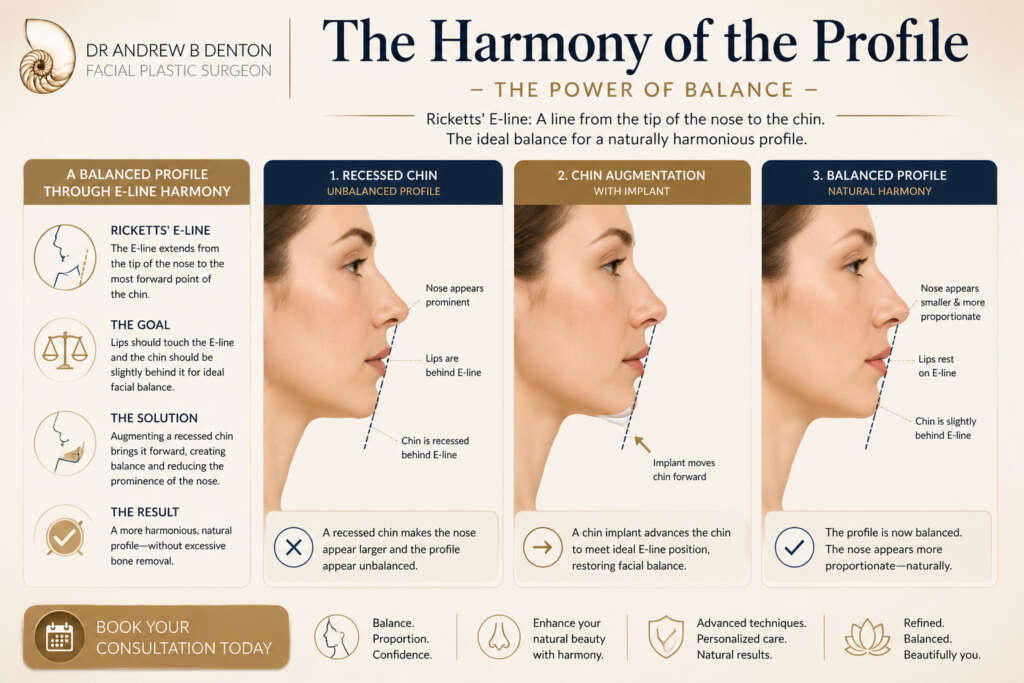
- Relationship to the chin: A weak or prominent chin dramatically changes how the nose reads. In some cases, a chin augmentation alongside rhinoplasty achieves what rhinoplasty alone cannot.
- Lip and nasolabial angle: The angle between the upper lip and the nasal base is a critical determinant of the nose’s perceived size and rotation.
- Ethnic proportionality: Ideal nasal proportions differ across ethnic backgrounds. A result that harmonizes with the patient’s heritage is inherently more successful than one that imposes an external template.
- Gender-specific aesthetics: Male and female nasal ideals differ meaningfully. A surgical plan that respects gender-appropriate aesthetics produces results that feel natural and authentic.
The most successful rhinoplasty results are often the least obvious. When the surgery works, what people notice is not the nose. They notice that something, somehow, has become quietly and unmistakably right about the whole face.
The Rise of Natural Rhinoplasty in Vancouver
A quiet but significant shift has taken place in rhinoplasty over the past decade. The overly sculpted, surgically obvious noses of earlier eras, the pinched tips, the over-rotated columellas, the aggressively reduced bridges, have given way to something altogether more elegant: the preservation approach.
Preservation Rhinoplasty
Modern preservation rhinoplasty represents a fundamental rethinking of how the nose is approached surgically. Rather than removing structural elements and rebuilding from scratch, preservation techniques seek to work with the existing anatomy wherever possible, making precise and targeted changes while maintaining the structural integrity, natural contours, and tissue relationships that give a nose its individual character.
The results, when performed by an experienced surgeon, are often striking in their naturalness. The dorsum maintains its integrity. The tip retains its character. The nose looks like the patient’s own nose, only better.
The goal of natural rhinoplasty is not invisibility. It is authenticity. The most successful outcomes are those where people notice your confidence, not your surgery.
Why Natural Results Require More Skill, Not Less
There is a common misconception that a more conservative result is technically easier to achieve. The opposite is often true. Preservation techniques require an extremely precise understanding of nasal anatomy, the ability to work in smaller margins, and an artistic judgement about exactly how much change is enough. It is far simpler to dramatically reduce a nose than to subtly refine one.
Principles guiding natural rhinoplasty in Vancouver’s leading practices:
- Facial harmony over isolated change
- Preservation of natural light reflections and contours
- Respect for ethnic and gender-appropriate proportions
- Conservative primary approach to minimize revision risk
- Long-term stability as a primary surgical goal
The Art of Aesthetic Evaluation: Achieving True Facial Balance
A common mistake in traditional rhinoplasty is focusing solely on the nose in isolation. Vancouver’s top surgeons practice aesthetic evaluation, which looks at the face as a whole. For instance, a nose may appear large simply because the patient has a weak or recessed chin.
By evaluating the profile holistically, Dr. Denton can determine if a patient would benefit more from a combined approach, such as a rhinoplasty and a chin implant, to create a more harmonious and elegant profile. This “big picture” thinking prevents the “operated look” and ensures the new nose fits the patient’s unique bone structure.
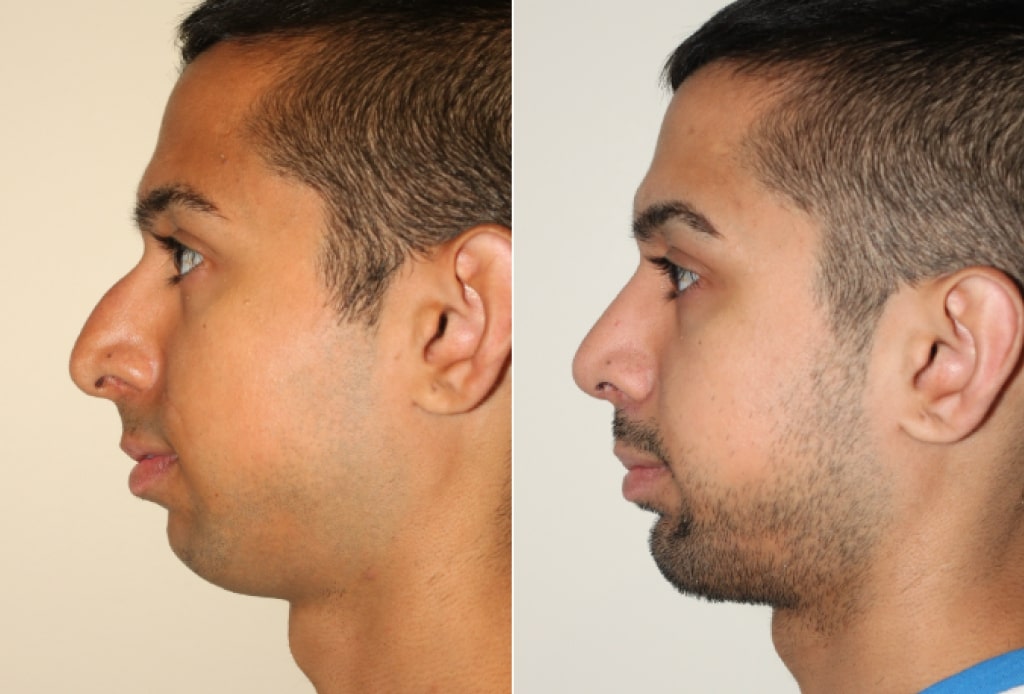
Advanced Rhinoplasty Techniques Used by Leading Vancouver Surgeons
Open vs. Closed Rhinoplasty
The choice between open and closed (endonasal) rhinoplasty is made based on the complexity of the changes required, the anatomy of the individual nose, and the surgeon’s technical preferences.
Open rhinoplasty involves a small incision across the columella (the strip of skin between the nostrils), providing direct visibility of the nasal framework. It is typically preferred for complex tip work, revision cases, or significant structural modifications.
Closed rhinoplasty works entirely through incisions inside the nostrils, leaving no visible scarring. It requires exceptional technical skill but, in appropriate cases, offers an efficient approach with a potentially more rapid recovery.
The Professional Choice for Precision
While some surgeons offer “closed” rhinoplasty, Dr. Denton and many elite Vancouver specialists prefer the open technique almost exclusively.
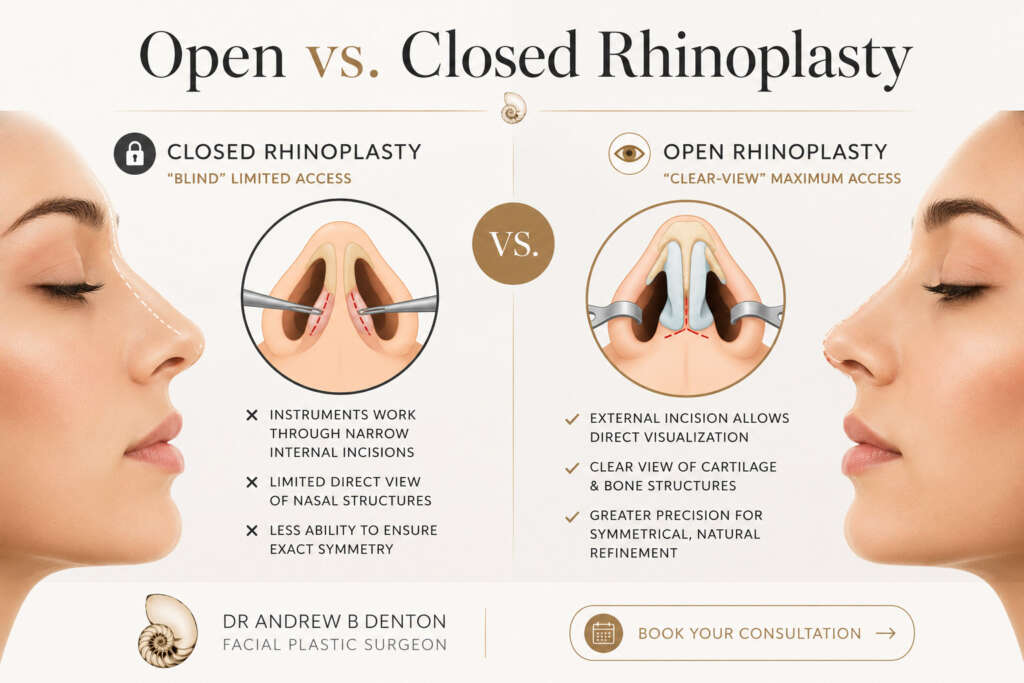
The open approach allows the surgeon to lift the skin and gain a full, unobstructed view of the nasal framework. In the world of complex surgery, visibility equals precision. It allows for more intricate adjustments to the nasal tip and better correction of structural deviations, significantly reducing the likelihood that a patient will need a revision later.
Preservation Rhinoplasty
As described above, preservation rhinoplasty represents the current evolution of the field. By working with existing structures rather than removing and replacing them, this approach offers superior long-term stability and a more natural postoperative appearance.
Structural Grafting
Cartilage grafts, typically harvested from the nasal septum, ear, or rib, are used to provide structural support, refine tip definition, or rebuild areas where existing structure is insufficient. In expert hands, grafting produces stable, long-lasting results.
Ethnic Rhinoplasty
Ethnic rhinoplasty is not a single technique but an approach. It encompasses the full range of rhinoplasty procedures performed with sensitivity to ethnic anatomy, aesthetic preferences, and the importance of preserving heritage while achieving personal goals. Given Vancouver’s extraordinary diversity, this expertise is not optional. It is essential. As a result, Dr. Denton has achieved an expertise in Asian cosmetic surgery. Traditional Western rhinoplasty often focuses on “reductive” techniques, removing bone to fix a hump. However, Asian nasal anatomy often features a lower bridge and a wider tip.
In these cases, Vancouver rhinoplasty surgeons like Dr. Denton utilize additive refinement. This involves using cartilage grafts or specialized implants to build up the nasal bridge and refine the tip for better definition. The goal is never to erase one’s heritage, but to enhance features in a way that is “ethno-appropriate” and culturally sensitive.
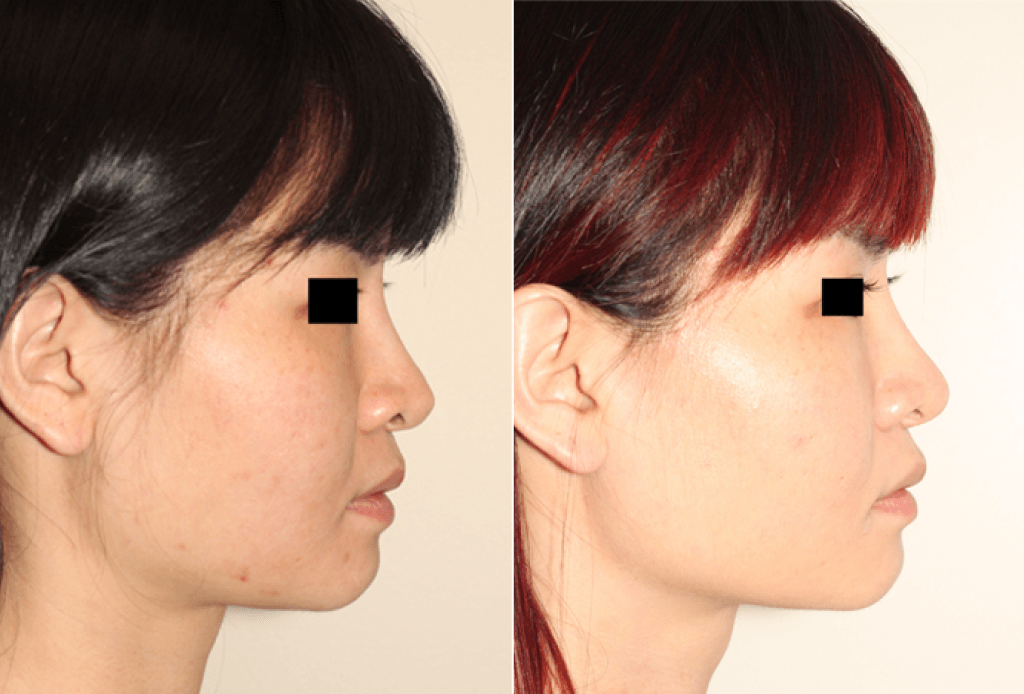
Revision Rhinoplasty
Revision rhinoplasty is among the most complex procedures in the specialty, often involving scar tissue, weakened or missing cartilage, and previously altered anatomy. It demands both advanced technical skills and the experience to anticipate how previously operated tissue will behave. Patients seeking revision rhinoplasty in Vancouver should seek out surgeons with a documented history of complex revision cases.
Rhinoplasty Recovery: What Sophisticated Patients Should Expect
Understanding recovery not only prepares patients practically, it helps manage the emotional arc of the process. Rhinoplasty recovery is a journey with well-defined phases, and knowing what to expect at each stage significantly improves the experience.
Rhinoplasty Recovery Timeline
| Phase | Timeframe | What to Expect |
| Immediate recovery | Days 1-3 | Swelling, bruising, nasal splint in place. Rest and elevation essential. Mild discomfort managed with prescribed medication. |
| Early healing | Days 4-10 | Splint/cast removed around day 7-10. Bruising around eyes begins to fade. Visible swelling remains significant. |
| Social presentability | Weeks 2-4 | Most bruising resolved. Swelling reduced substantially. Most patients comfortable returning to social activities. |
| Continued refinement | Months 2-6 | Ongoing reduction of swelling, especially at the tip. Subtle improvements continue to emerge. |
| Near-final result | Months 6-12 | Approximately 80% of swelling resolved. The result is clearly visible. Final tip definition emerging. |
| Final result | 12-18 months | Full resolution of swelling. Final result visible. Tissues settled into their permanent position. |
The Emotional Dimension of Recovery
Even patients who have prepared thoroughly can find the early weeks of rhinoplasty recovery emotionally challenging. Swelling distorts the final result, and the nose in the first weeks rarely resembles the eventual outcome. Experienced surgeons prepare their patients for this explicitly, offering reassurance grounded in a specific understanding of how their individual anatomy will evolve.
Patients throughout Greater Vancouver are encouraged to maintain regular follow-up during recovery, and Dr. Denton’s team is available to provide guidance, reassurance, and clinical assessment at each stage of the process.
Rhinoplasty Statistics and Trends
Rhinoplasty has consistently ranked among the most performed facial plastic surgery procedures globally. According to reports from the American Society of Plastic Surgeons and the American Academy of Facial Plastic and Reconstructive Surgery, rhinoplasty has seen significant year-over-year growth in both primary and revision procedures.
- Patient satisfaction rates for rhinoplasty performed by board-certified specialists consistently exceed those reported for general cosmetic surgery providers.
- Demand for natural-looking outcomes has increased substantially, with patients explicitly requesting results that preserve their ethnic and individual identity.
- Revision rhinoplasty consultations have risen considerably, reflecting the complexity of the procedure and the long-term consequences of choosing an insufficiently experienced surgeon.
- The proportion of male rhinoplasty patients has grown, reflecting broader cultural acceptance of cosmetic facial surgery among men.
- Digital imaging and AI-assisted surgical planning tools have improved patient communication and surgical precision.
- Patients are increasingly well-informed and engaged, arriving at consultations with specific anatomical concerns and realistic expectations shaped by thorough research.
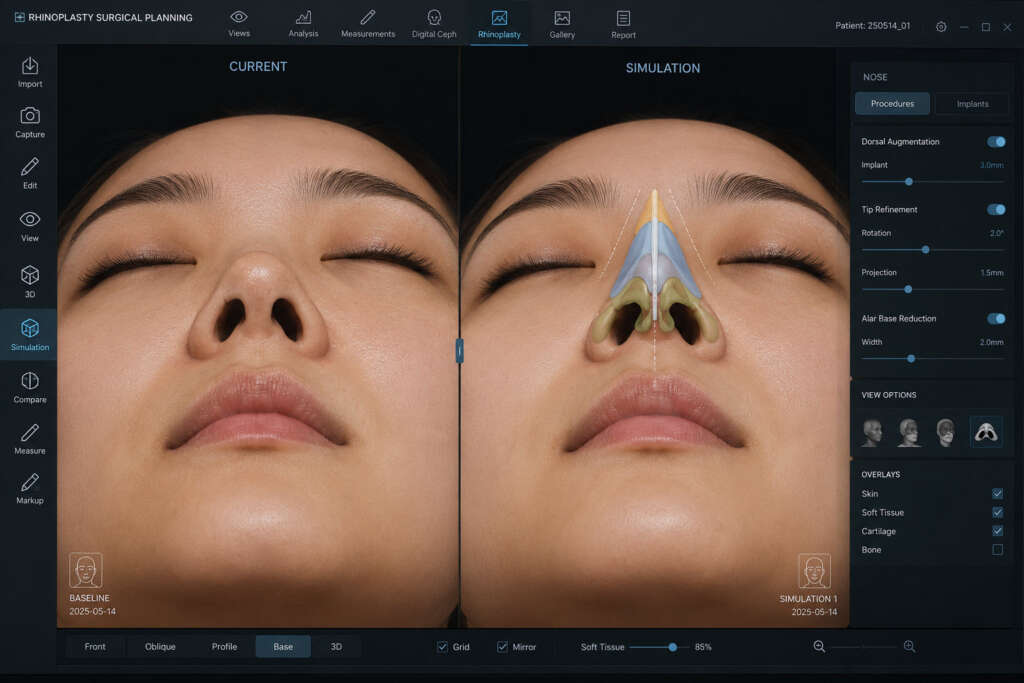
In Canada, and particularly in metropolitan markets like Vancouver, the sophistication of the rhinoplasty patient has increased markedly. Patients are not simply seeking improvement. They are seeking the right improvement, achieved through the most advanced and safest techniques available.
How to Choose the Best Rhinoplasty Surgeon in Vancouver
The decision to undergo rhinoplasty is significant. The decision about who will perform it may be the most consequential you make in the entire process. The following checklist represents a framework for evaluating any rhinoplasty surgeon in Vancouver or across British Columbia.
The Luxury Rhinoplasty Consultation Checklist
- Confirm board certification in facial plastic surgery through recognized bodies such as the Royal College of Physicians and Surgeons of Canada or the ABFPRS.
- Review an extensive before-and-after gallery with emphasis on results that match your anatomy, skin type, and ethnic background.
- Confirm facial-only specialization. A surgeon who performs rhinoplasty among dozens of unrelated procedures cannot develop the same depth of expertise as one whose practice is dedicated entirely to the face.
- Assess communication quality. Does the surgeon listen before speaking? Do they address your specific concerns, or do they default to a scripted response?
- Explore aesthetic philosophy. Do they understand the difference between reshaping a nose and refining a face? Are they comfortable discussing natural outcomes?
- Ask about revision experience. Even the best surgeons encounter cases requiring secondary procedures. A confident surgeon will discuss this openly.
- Request references or patient testimonials specific to your procedure type.
- Review online reputation across multiple platforms, including Google, RealSelf, and other professional directories.
- Evaluate the consultation experience itself. Premium care begins at the first appointment. A disorganized or rushed consultation is an early signal of what surgical care may look like.
- Trust your instincts. Technical credentials matter enormously, but so does the relationship. You should feel heard, respected, and genuinely understood.
Why Patients Choose Dr. Andrew B. Denton
Dr. Andrew B. Denton is a board-certified facial plastic surgeon practising in Vancouver, BC. He is not only a Fellow of the Royal College but is also board-certified by the American Board of Facial Plastic and Reconstructive Surgery. This dual-border certification is a hallmark of Vancouver’s elite surgeons, reflecting a commitment to international standards of excellence. His practice is devoted entirely to facial plastic and reconstructive surgery. For patients seeking rhinoplasty in Vancouver, this specialization matters deeply.
A Philosophy of Refined Individualism
Dr. Denton approaches each rhinoplasty consultation with the understanding that there is no universal ideal. The goal is not to construct a nose that conforms to a template, but to understand the individual’s face, their features, their heritage, their proportions, and their personal aspirations, and to develop a surgical plan that serves all of them simultaneously.
This philosophy is reflected in every aspect of his practice, from the depth and duration of consultations to the meticulous surgical planning that precedes every procedure.
Areas of Surgical Expertise
- Primary rhinoplasty, including cosmetic and functional concerns
- Revision rhinoplasty for patients seeking correction after prior surgery
- Ethnic rhinoplasty with respect for individual heritage and facial character
- Septorhinoplasty combining aesthetic refinement with airway improvement
- Functional rhinoplasty for breathing obstruction
- Complex nasal reconstruction
The Consultation Experience
A consultation with Dr. Denton is not a sales interaction. It is a clinical conversation. Patients can expect thorough discussion of their concerns, an honest assessment of what is and is not achievable, and a treatment plan developed collaboratively rather than prescribed unilaterally. Patients throughout Vancouver, North Vancouver, West Vancouver, Burnaby, Richmond, and Surrey have found in Dr. Denton a practitioner who takes time to listen before he ever considers a surgical plan.
Dr. Denton believes that: “Informed patients make the best decisions. My philosophy is built on the principle that every patient should be an equal member of the decision-making team. This begins with an unhurried, confidential consultation where you discuss your aesthetic goals, medical history, and any concerns in detail.“
Frequently Asked Questions: Rhinoplasty in Vancouver
How much does rhinoplasty cost in Vancouver?
Rhinoplasty costs in Vancouver typically range from approximately $8,000 to $20,000 or more, depending on the complexity of the procedure, the surgeon’s expertise, anaesthesia, and facility fees. Revision rhinoplasty and complex ethnic or functional cases generally fall at the higher end of this range. A thorough consultation with a board-certified facial plastic surgeon will provide a personalized, transparent fee breakdown.
What is the recovery time for rhinoplasty?
Most patients return to social activities within two to three weeks of rhinoplasty, when the majority of bruising has resolved and swelling has subsided sufficiently. However, the full result of rhinoplasty, particularly tip definition and the final resolution of subtle swelling, typically takes 12 to 18 months to emerge completely.
Can rhinoplasty improve breathing problems?
Yes. Septorhinoplasty and functional rhinoplasty procedures are specifically designed to address structural causes of nasal obstruction, including a deviated septum, enlarged turbinates, or nasal valve collapse, while simultaneously achieving aesthetic goals. Many patients find that rhinoplasty delivered both a more harmonious appearance and a meaningful improvement in breathing function.
How do I find the best rhinoplasty surgeon in Vancouver?
Begin by confirming board certification in facial plastic surgery, then review before-and-after galleries thoroughly. Seek a surgeon whose practice is dedicated to facial procedures, and whose results consistently demonstrate the natural, balanced outcomes you are seeking. Personal consultation is essential: the quality of the consultation itself is a direct indicator of surgical care.
Is revision rhinoplasty more difficult than primary rhinoplasty?
Revision rhinoplasty is generally considered significantly more complex than primary rhinoplasty. Previously operated tissue is often scarred and less predictable. Structural support may have been altered or removed. For these reasons, revision rhinoplasty should be entrusted only to surgeons with specific and documented experience in complex revision cases.
What makes natural rhinoplasty results look better long-term?
Natural results depend on the preservation of structural integrity, respect for existing anatomy, conservative surgical targets, and the use of advanced techniques that work with rather than against the nose’s natural dynamics. Surgeons who prioritize long-term stability over dramatic short-term change consistently produce results that improve with age rather than deteriorating.
Am I a good candidate for rhinoplasty?
Good candidates for rhinoplasty are adults in good general health with realistic expectations and specific, articulable concerns about the appearance or function of their nose. Nasal growth should be complete, generally by the late teens. Candidates should not smoke, or should commit to cessation well in advance of surgery. A thorough consultation with a qualified facial plastic surgeon is the only way to determine individual candidacy.
What is the best age for rhinoplasty?
Rhinoplasty is typically performed after nasal growth is complete, generally around age 17 to 18 for young women and 18 to 19 for young men. There is no upper age limit provided the patient is in good health, though the surgeon will assess skin quality, healing capacity, and any age-related anatomical changes that may influence the surgical plan.
How long do rhinoplasty results last?
Rhinoplasty results are permanent. Once the nose has been surgically refined and the healing process is complete, the structural changes are lasting. The nose will continue to age naturally alongside the rest of the face, but the surgical improvements are durable. This is precisely why the initial choice of surgeon and technique is so consequential.
Does rhinoplasty leave visible scars?
In closed rhinoplasty, all incisions are placed inside the nostrils and no external scarring is visible. In open rhinoplasty, a small incision is made across the columella. In most cases, this heals to become essentially imperceptible within several months. In expert hands, open rhinoplasty scarring is rarely a concern for patients.
Begin Your Personal Rhinoplasty Journey with Dr. Andrew B. Denton
The decision to explore rhinoplasty is a deeply personal one, and it deserves a deeply personal response. Not a templated consultation, not a list of procedures. A genuine conversation about your face, your goals, and what is genuinely possible.
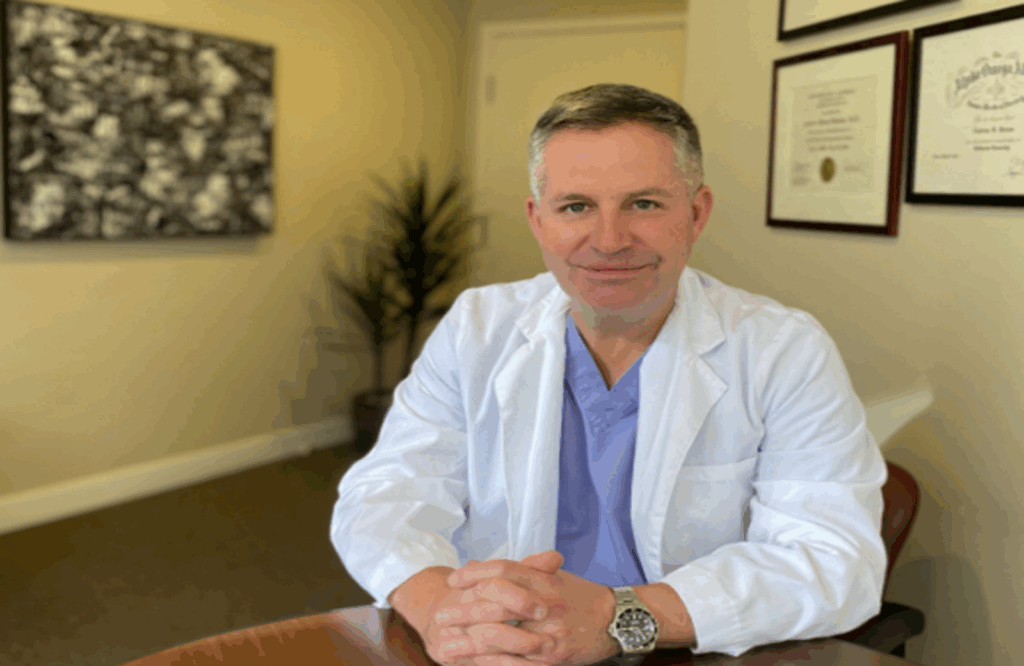
Dr. Andrew B. Denton offers private rhinoplasty consultations at his state-of-the-art Vancouver facility for patients throughout British Columbia, including North Vancouver, West Vancouver, Burnaby, Richmond, Surrey, and the wider Lower Mainland.
In your consultation, you will receive:
- A thorough discussion of your concerns and aesthetic goals
- An honest and experienced clinical assessment of your nasal anatomy
- A personalized surgical plan designed around your face, not a template
- Complete transparency regarding techniques, recovery, risks, and realistic outcomes
- A professional second opinion if you are considering revision rhinoplasty
Refined results begin with the right relationship. We invite you to begin yours.