You keep noticing it in photos before you notice it in the mirror. The light hits your face at a certain angle, and the cheeks look flatter than you remember, almost tired, even on days when you feel perfectly rested. If that sounds familiar, you are not imagining things, and you are not alone. Facial volume loss along the cheekbones is one of the most common concerns facial plastic surgeons hear in consultations, and it is also one of the most misunderstood.
If you find yourself searching for facial plastic surgeons near me to address a tired or “gaunt” look, it is likely that you are experiencing facial volume loss. Whether you are interested in the immediate results of facial fillers or the permanent structural changes offered by cheek implant surgery, understanding your options is the first step toward a refreshed, natural appearance. As a board-certified facial plastic surgeon with 25 years of experience, Dr Denton’s goal is to help you achieve a well-proportioned profile that aligns your outward reflection with your inner vitality.
Dr Denton’s practice is dedicated entirely to the face, from surgical procedures like cheek implants to non-surgical treatments like dermal fillers and Botox. When patients start typing facial plastic surgeons near me into Google, they usually already suspect that a general cosmetic provider is not quite the right fit for a concern this specific to facial anatomy. We have created this guide to walk you through why cheekbones recede, what your realistic options are, and how to think about the decision between fillers and cheek implant surgery in a way that leads to a natural, balanced result rather than an overdone one.
What Are Receding Cheekbones?
Receding cheekbones describe a change in the contour of the midface, where the cheek area that once projected forward and outward begins to look flatter, hollow, or set back. This is different from having naturally lower or subtle cheekbones from birth. Receding cheekbones usually develop gradually, and they change the overall balance of the face because the cheeks sit at the visual center, connecting the eyes, nose, and jawline.
When the midface loses projection, several things tend to happen at once. Under-eye hollows become more noticeable because there is less cheek volume supporting the lower eyelid. The nasolabial folds, the lines that run from the nose to the corners of the mouth, can deepen. The lower face may start to look heavier by comparison, even if no weight has actually been gained there. None of this happens because of any single problem. It happens because the underlying structure of the midface, both bone and soft tissue, is shifting.
In the world of facial plastic surgery, we look at the cheeks as the foundation for the eyes and the upper face. When this foundation is weak, it affects the entire facial harmony, sometimes making the nose appear more prominent or the jawline look less defined.
Why Facial Volume Loss Happens
Facial volume loss is not caused by one factor. It is the accumulation of several processes that overlap as we age.
- Age-related fat loss is one of the biggest contributors. The face contains distinct fat compartments that provide fullness and youthful contour. Over time, these compartments shrink and can also shift position, which changes how light and shadow fall across the cheeks.
- Collagen and Elastin Depletion. After our 30s and 40s, our body’s production of collagen slows significantly. This loss of elasticity means the skin can no longer “snap back” over the mid-face, leading to a deflated or sagging appearance.
- Bone remodelling plays a quieter but equally important role. The facial skeleton, including the cheekbones themselves, undergoes gradual resorption with age. The bony support that once held soft tissue up and out becomes slightly less substantial, so the tissue above it settles inward.
- Genetics influence how early and how noticeably this occurs. Some patients have thinner midface fat pads or naturally flatter cheekbone projection, which makes volume loss more visible earlier in life.
- Significant weight loss. This can also accelerate the appearance of receding cheekbones, since facial fat often decreases proportionally with body fat.
- Sun damage and smoking. Both affect skin quality and collagen production, which means the tissue overlying the cheek has less elasticity to hold its shape even if underlying volume loss is modest.
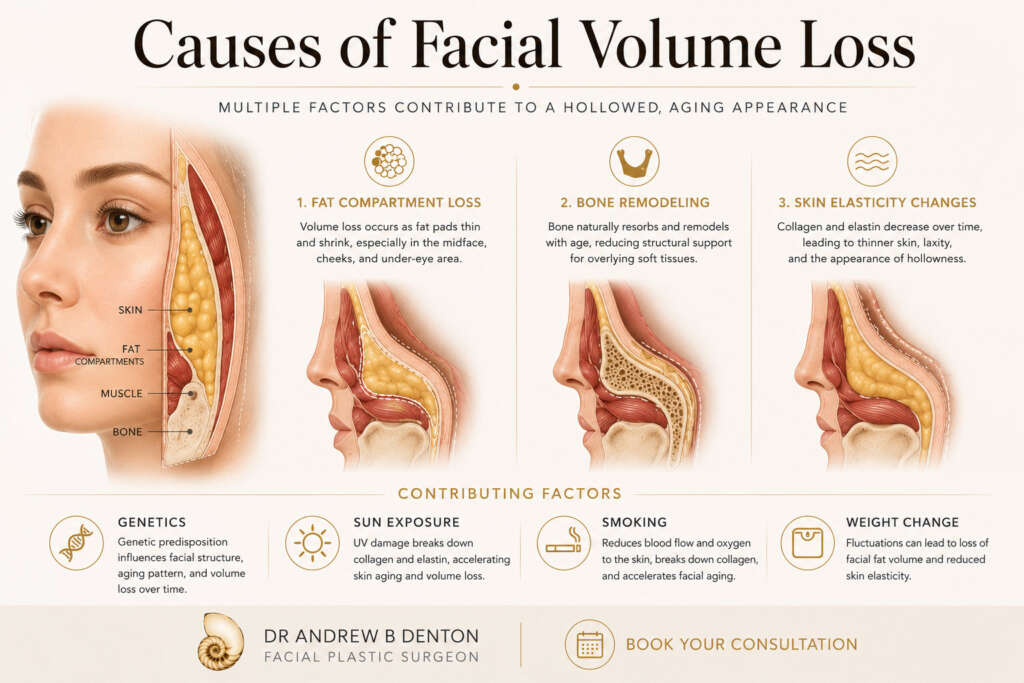
And simple ageing, independent of any single cause above, gradually affects all of these systems together. This is why two people the same age can have very different degrees of midface volume loss depending on their genetics, lifestyle, and sun exposure history.
Common Signs You May Notice
Most patients describe a combination of the following when they first notice changes in the midface:
- A flatter or more angular look to the cheeks compared to older photos
- Increased hollowing or shadowing under the eyes
- Deeper nasolabial folds or a tired appearance even when well rested
- A sense that the lower face looks heavier by comparison, without actual weight gain
- Skin that seems to have less bounce or firmness over the cheek area
- A face that looks different from certain angles or in certain lighting, even if it seems fine in the mirror
Non-Surgical Options for Restoring Cheek Volume
For those looking for a “lunchtime” rejuvenation with no downtime, facial fillers are often the ideal starting point. Dr Denton utilizes soft tissue fillers, primarily Hyaluronic Acid (HA) products like Juvederm™, to restore volume and lift sagging tissues.
How it Works: HA is a naturally occurring substance in your body that retains moisture and adds plumpness. When precisely injected into the cheek area, these fillers act as a temporary scaffold, lifting the skin and smoothing out wrinkles. In many cases, we use a fine, blunt micro-cannula to ensure a comfortable experience and a natural-looking result.
The Benefits of Fillers:
- Immediate Gratification: You can see the results before you leave the clinic.
- No Downtime: Most patients return to their daily routines immediately, making it a popular choice for busy Vancouver professionals.
- Customizable: We can add volume subtly or more dramatically depending on your goals.
- Safety: HA fillers are reversible and have an exemplary safety profile.
Dr Denton’s specialist aesthetic nurse injector, Azin Yazdani, and he work closely with patients to ensure that filler treatments enhance your unique features without looking “overdone”. However, the tradeoff with non-surgical treatment is durability. Filler is not permanent, and most patients will want a touch up over time to maintain their result.
Surgical Options: Cheek Implants
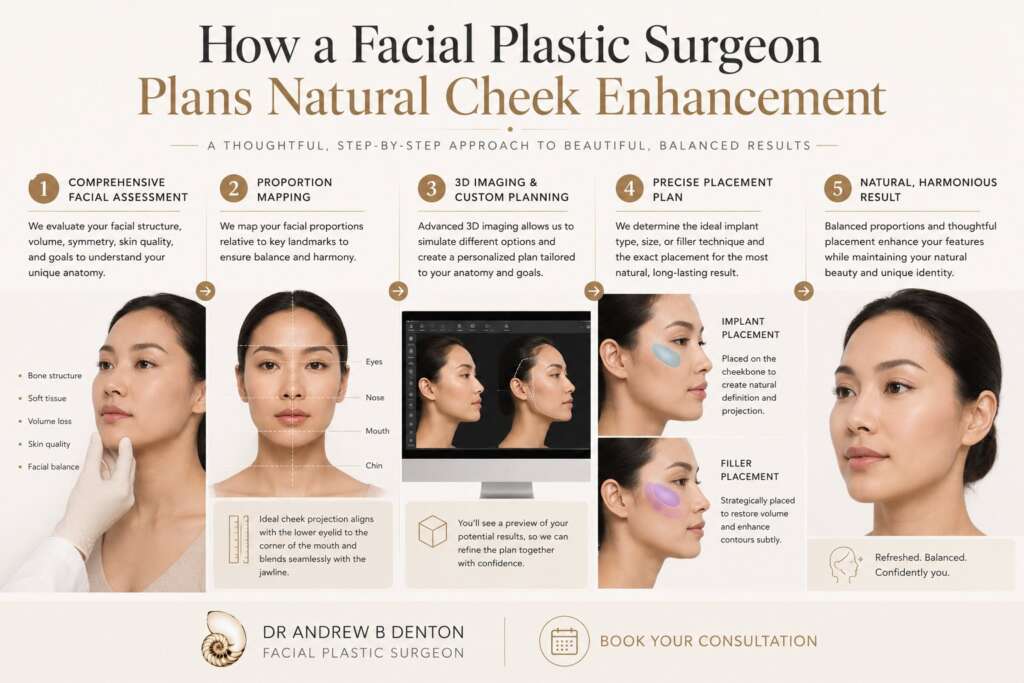
While fillers are excellent for temporary volume, they cannot achieve the same level of structural sculpting as cheek implant surgery. If you are looking for a permanent solution to flat or receding cheekbones, facial implants provide a definitive way to reshape the mid-face.
The Procedure
Dr Denton performs cheek implant surgery in our fully accredited private operating facility in Vancouver. To ensure your comfort, the procedure is typically done under twilight anaesthesia, a form of procedural sedation that allows you to sleep through the surgery without the need for a breathing tube.
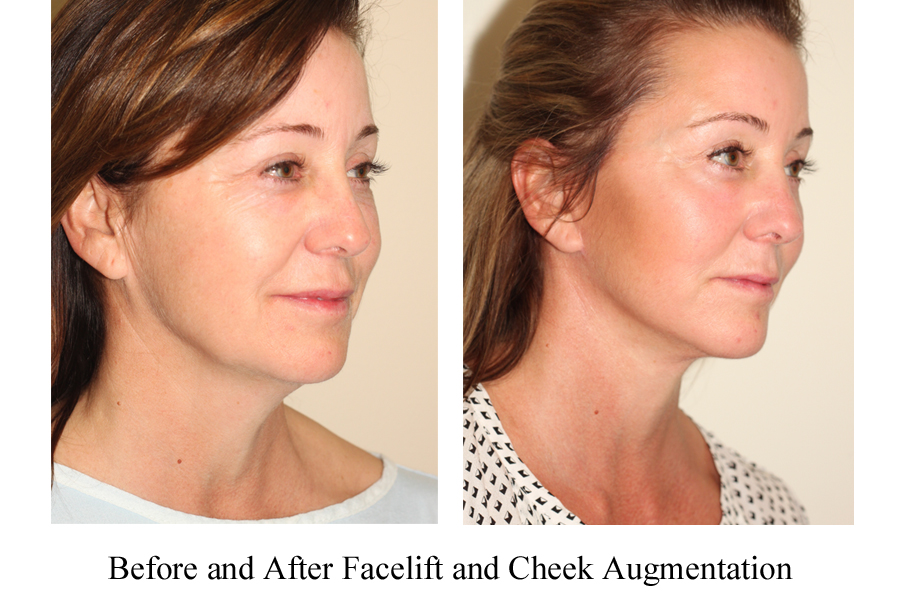
One of the greatest advantages of this procedure is the lack of external scarring. I place the implants through small incisions made inside the mouth, above the upper teeth. I then create a precise pocket over the cheekbone and insert a custom-sized, biocompatible silicone implant. These modern implants are non-migrating and are designed to feel like your natural bone structure.
Types of Cheek Implants
- Malar Implants: These are placed directly on the cheekbones to provide that classic “high-cheekboned” look.
- Submalar Implants: These address volume loss lower in the mid-face, helping to fill in “gaunt” hollows.
- Combination: For comprehensive rejuvenation, we can use implants that address both areas.
Fillers vs. Cheek Implants: A Side-by-Side Comparison
The table below summarizes how dermal fillers and cheek implants compare across the factors patients ask about most often in consultation.
| Feature | Dermal Fillers | Cheek Implants |
| Type of treatment | Non-surgical injection | Surgical placement |
| Results | Subtle, temporary volume restoration | Structural, longer lasting enhancement |
| Longevity | Roughly 9 months, sometimes longer | Intended to be permanent |
| Downtime | 1 to 3 days | About 1 week, full settling by 3 months |
| Incisions | None, injection only | Small incision, often inside the mouth |
| Reversibility | Can be dissolved or adjusted | Requires surgical revision to change |
| Best for | Mild to moderate volume loss, subtle change | Moderate to significant volume loss, permanent change |
| Maintenance | Periodic touch up treatments | None required after healing |
Who Is a Better Candidate for Fillers?
Choosing between surgical and non-surgical treatments is a personal decision that we will discuss at length during your consultation. You might be a better candidate for facial fillers if:
- You are in your 30s or 40s and noticed the early signs of volume loss.
- You want to “test out” the look of fuller cheeks before committing to surgery.
- Your primary concern is minor hollowing or fine lines rather than a major structural deficiency.
- You prefer a treatment that requires zero recovery time.
Who Is a Better Candidate for Cheek Implants?
Cheek implant surgery is often the superior choice for patients who:
- Have significant structural flatness due to genetics or trauma.
- Are tired of the ongoing cost and maintenance of filler injections every 6 to 9 months.
- Desire a level of definition and “chiselled” appearance that soft tissue fillers cannot achieve.
- Are already undergoing another facial procedure, such as a facelift or rhinoplasty, and want to enhance their overall facial balance.
Candidate Snapshot
| Dermal Fillers | Cheek Implants | |
| Best for | Mild to moderate volume loss, patients wanting a subtle or temporary change | Moderate to significant volume loss, patients wanting a permanent structural change |
| Less ideal for | Patients wanting a permanent result without repeat treatments | Patients unsure about surgery or wanting to preview a result first |
| Typical downtime | 1 to 3 days | About 1 week, final result by 3 months |
| Longevity | Approximately 6 to 9 months per treatment | Intended to be permanent |
| Main advantage | Low downtime, adjustable, reversible | Long lasting structural correction, no ongoing maintenance |
Why Facial Plastic Surgeons Are Best Suited for This Procedure
When searching for the best Vancouver cheek implant surgeons, it is vital to understand the difference in training. A general plastic surgeon operates on the entire body, but a facial plastic surgeon focuses exclusively on the head and neck.
Dr Denton’s background is in Otolaryngology (Head and Neck Surgery), followed by specialized fellowship training in facial plastic and reconstructive surgery. This provides me with a deep, nuanced understanding of facial anatomy, including the nerves, muscles, and bone structures that are critical during mid-face procedures. In my practice, the ultimate goal is not just to “add volume,” but to create an appearance that is well-proportioned, youthful, and, above all, natural.
Why Vancouver Patients Trust Dr Andrew Denton for Facial Rejuvenation
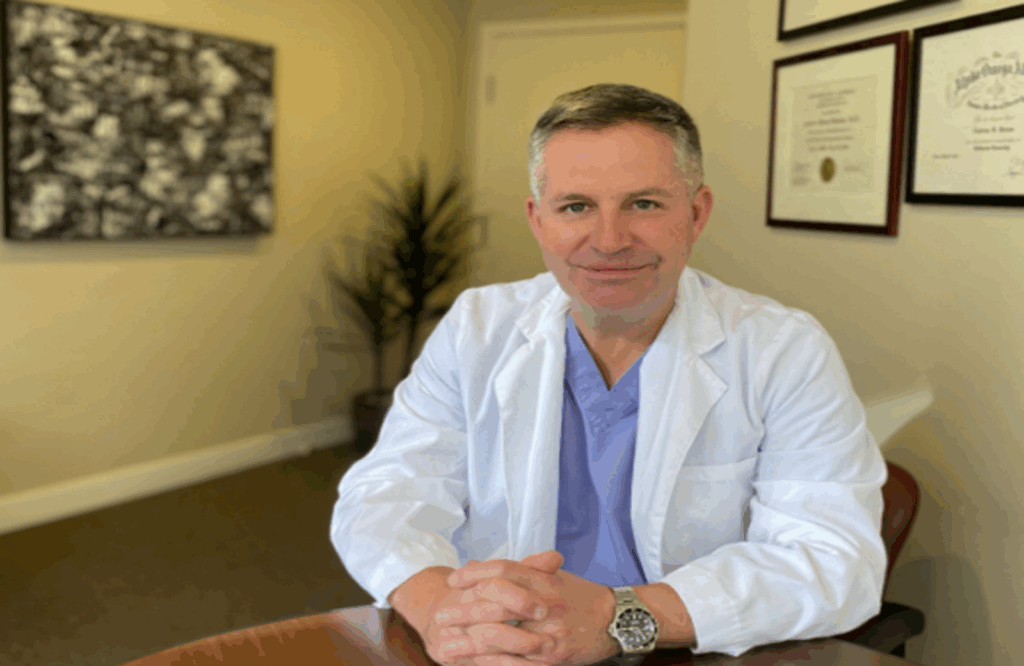
At Dr Denton’s Vancouver clinic, he believes that informed patients make the best decisions. That is why he treats every patient as an equal member of the decision-making team.
During your unhurried consultation, we will utilize high-resolution computer imaging. This technology allows us to manipulate your digital photograph on-screen so you can preview the anticipated results of your cheek implant surgery or filler treatment. This ensures that your aesthetic goals align with the surgical plan before any incisions are made.
Furthermore, performing procedures in our state-of-the-art, accredited surgical suite ensures the highest standards of safety, hygiene, and convenience for our patients.
Recovery and What to Expect
Recovery differs meaningfully between the two options, and this is often the deciding factor for patients weighing fillers against implants. If you opt for facial fillers, your recovery is essentially non-existent. You may experience minor redness or swelling for 24 hours, but you can generally return to work immediately.
For cheek implant surgery, the recovery is quite efficient:
- Days 1–3: You will experience some swelling and perhaps minor bruising in the mid-face. Cold compresses and resting with your head elevated are essential during this time.
- Day 7: Most patients feel comfortable returning to work and social activities.
- Weeks 2–3: You can typically resume light, non-cardiac exercise.
- The Results: While visible swelling resolves quickly, it can take several months for the implants to fully “settle” into their final, natural-looking position.
Risks, Limitations, and Realistic Expectations
Every procedure carries some degree of risk, and part of my role is making sure patients understand these clearly before moving forward rather than after.
With dermal fillers, the most common issues are temporary swelling, bruising, and asymmetry that resolves as swelling subsides. Less common but more serious complications include vascular occlusion, where filler inadvertently compresses a blood vessel, which is why injection technique and anatomical knowledge matter as much as the product itself.
With cheek implants, published research has documented infection and implant migration as the most frequently reported complications in facial implant surgery generally, along with less common issues like asymmetry or a need for revision. These risks are manageable with careful surgical planning and patient selection, but they are real, and I discuss them directly with every patient considering implants rather than minimizing them.
Realistic expectations matter as much as technique. Filler is not permanent and will require maintenance. Implants are more permanent but involve a real surgical recovery and, like any implant, carry a small long-term risk of needing revision. Neither option erases the ageing process entirely, and the goal of both is a natural, proportionate improvement rather than a dramatic transformation.
By the Numbers: Key Facts
A few current data points are worth knowing as you weigh your options.
| Key Facts Long-term imaging research using MRI has found that hyaluronic acid filler placed in the midface can persist well beyond the 3 to 12 month window patients are often told to expect, with some patients showing detectable filler at the injection site for several years and, in select cases, considerably longer. Research on facial implant surgery has found that it can generally be performed safely, though it carries meaningful risks that patients should discuss with their surgeon in detail beforehand. Published complication data for facial implants has identified infection and implant migration as the most frequently reported issues, which is why careful patient selection, precise surgical planning, and experienced anatomical judgment matter throughout the process. |
Frequently Asked Questions
Are cheek implants permanent?
Cheek implants are intended to be a permanent solution. They are made of biocompatible material and placed directly against the cheekbone, so they do not require the ongoing maintenance that dermal fillers do. In rare cases, revision surgery may be needed later for reasons such as change in facial structure over time or patient preference, but the implant itself is designed for long term placement.
How long do cheek fillers last?
Most hyaluronic acid fillers used in the midface last approximately 3 to 9 months before a touch-up is recommended, though recent imaging research suggests filler can sometimes be detected at the injection site well beyond that window in certain patients. Individual results vary based on the product used, the area treated, and each patient’s metabolism.
Is one option safer than the other?
Both options carry a different risk profile rather than one being uniformly safer. Fillers are non-surgical and carry a lower overall risk, though rare but serious complications like vascular occlusion can occur. Cheek implants involve surgery and carry surgical risks, including infection and implant migration. The right choice depends on your anatomy, health history, and goals, which is something we discuss thoroughly during consultation.
Can fillers make cheeks look natural?
Yes, when placed with attention to the deeper facial fat compartments and the patient’s existing bone structure rather than only adding surface volume. The goal with filler should always be restoring what has been lost, not creating an exaggerated new contour. Overfilling, not the product itself, is usually what causes an unnatural appearance.
What is recovery like after cheek implant surgery?
Most patients experience noticeable swelling for the first 48 to 72 hours, take approximately one week off from work and social activities, and see the final settled contour by around three months. Since the incision is typically placed inside the mouth, there is no visible external scar.
How do I know which option is right for me?
This depends on the degree of your volume loss, your underlying bone structure, how permanent you want the result to be, and your tolerance for downtime. A thorough consultation, including an assessment of your facial anatomy and a conversation about your goals, is the most reliable way to determine whether fillers, cheek implants, or a combination approach makes the most sense for you.
Will a cheek implant or filler change my whole facial appearance?
It should not, and that is the point. The goal of well-planned cheek augmentation is to restore balance among the eyes, nose, cheeks, and jawline so the face looks more rested and proportionate, not visibly altered. Any recommendation I make is built around your existing features rather than a standardized look.
Ready to Discuss Your Options and Restore Your Facial Harmony?
If you are ready to address receding cheekbones and reclaim a more youthful, contoured appearance, I invite you to take the next step. Whether you choose the temporary lift of facial fillers or the permanent definition of cheek implant surgery, Dr Denton and his team are here to guide you through every stage of your transformation.
Take the first step toward a more confident you.
Schedule your confidential consultation today! Call (604) 879-3223 or visit our website to book your appointment at our state-of-the-art Vancouver facility. Let’s work together to achieve the natural, balanced look you deserve.